Justin Fairfax Kills Wife, Self in Murder-Suicide (42 chars)
Breaking News
From Rising Star to Tragedy: The Fall of Virginia’s Lt. Gov. Justin Fairfax
Former lieutenant governor kills wife, then himself in apparent murder-suicide as contentious divorce proceedings reach critical juncture
Justin Edward Fairfax, once considered one of the Democratic Party’s most promising rising stars, died on Wednesday morning in an apparent murder-suicide at his Annandale, Virginia home. The former lieutenant governor, 47, shot and killed his wife, Dr. Cerina Fairfax, before turning the weapon on himself, authorities confirmed. The tragedy marks a devastating coda to a political career derailed by scandal and a personal life consumed by marital strife, alleged alcoholism, and legal turmoil.
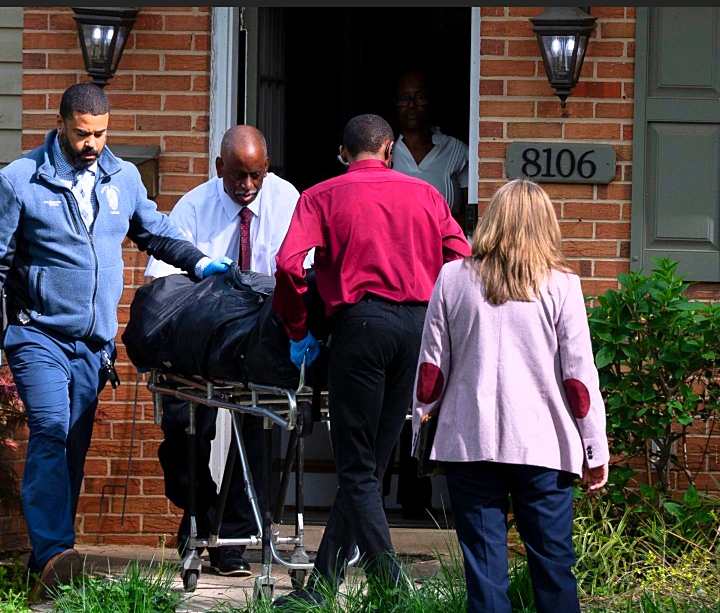
Fairfax County Police Chief Kevin Davis announced the incident Thursday morning, revealing that the deaths occurred at approximately 8:45 a.m. on Wednesday in the couple’s residence. Officers responding to a 911 call made by the couple’s teenage son discovered Cerina Fairfax with multiple gunshot wounds in the basement, while Justin Fairfax was found deceased in the master bedroom. The same firearm was used in both shootings, investigators determined.
The deaths occurred just two weeks after a Fairfax County Circuit Court judge granted primary physical custody of the couple’s two children—ages 16 and 14—to Cerina, and ordered Justin to vacate the family home by April 30. Most significantly, Justin Fairfax was scheduled to appear in court on April 21—five days before his death—for further divorce proceedings.
The Rise and Promise of a Democratic Heir Apparent
Fairfax’s trajectory from celebrated public servant to tragic victim of his own despair represents one of Virginia’s most dramatic political downfalls. Elected as Virginia’s 41st Lieutenant Governor in 2017, Fairfax became the state’s second African American elected to statewide office, following former Governor Douglas Wilder. At 38 years old, Fairfax embodied the rising diversity and youthful ambition of the Democratic Party, serving alongside Governor Ralph Northam during the first two years of his administration.
As lieutenant governor, Fairfax chaired the governor’s cabinet, presided over the state Senate, and wielded considerable influence over Virginia’s legislative agenda. Political analysts widely projected him as a future gubernatorial candidate, and some national Democrats speculated about higher office. His background as a Harvard-educated lawyer who had worked in the Obama administration bolstered the image of a seasoned, accomplished public servant.
The 2019 Reckoning: Sexual Assault Allegations Emerge
That trajectory shattered in February 2019 when two women publicly accused Fairfax of sexual assault. Meredith Watson alleged that Fairfax assaulted her in 2000 while they were both students at Duke University. Vanessa Tyson subsequently came forward claiming Fairfax assaulted her in 2004. Fairfax categorically denied both allegations, characterizing them as politically motivated and fabricated.
“These allegations were false. They’re fabricated. They’re also politically motivated,” Fairfax stated in December 2019 while announcing his gubernatorial ambitions. He further claimed: “We’ve shown over these last ten months that these allegations were false. They’re risen above it and gotten the truth out.”
— Justin Fairfax, Virginia Lt. Governor (Dec. 2019)
Fairfax subsequently sued CBS News for defamation after the network aired interviews with both accusers. No criminal charges were ever filed, and Fairfax remained in office throughout the controversy. However, the allegations irreparably damaged his political brand and energized opposition within his own party. Calls for his resignation from party leaders and advocacy groups mounted, though he remained steadfast in refusing to step down.
The Failed Gubernatorial Bid
Undeterred, Fairfax announced his candidacy for Virginia Governor in 2021, positioning himself as a champion of education and criminal justice reform. However, the electorate appeared unwilling to move past the sexual assault allegations. Fairfax finished a distant fourth in the Democratic primary with just 3.54% of the vote, a humbling rejection that effectively ended his political viability.
Personal Deterioration and Marital Collapse
Court documents filed in connection with the couple’s divorce proceedings paint a harrowing portrait of Fairfax’s psychological and personal decline following the end of his political career. Cerina Fairfax filed for divorce on July 18, 2025, two years after the couple separated on June 1, 2024—though they continued living in the same residence while maintaining separate bedrooms.
According to court filings reviewed by multiple news outlets, the couple had entered into a post-nuptial agreement on December 14, 2024. In her divorce petition, Cerina alleged that Justin “has not complied with the post-nuptial agreement in any form since its execution” and “does not make any financial contributions to support the Wife and their children.” The filing further stated: “There is no expectation or hope of reconciliation between the parties.”
“The former lieutenant governor ‘cloistered himself’ in his office and home ‘and has lost focus on his family and domestic life,'” a judge wrote in court documents. The judge noted that after leaving state government in 2022, problematic behaviors “reemerged more profoundly and have not abated to this day.”
— Fairfax County Circuit Court judge, March 2026
Alcoholism and Financial Abandonment
Court testimony and documentary evidence revealed that Fairfax had descended into severe alcoholism, with Cerina testifying that “heavy daily alcohol consumption by Father has become the norm.” The judge’s order noted that Fairfax allowed the family’s mortgage to fall into default multiple times and ignored bills related to his children’s private school tuition and other household obligations. The former lieutenant governor made no attempt to contest these damaging findings in court.
The Final Days: Legal Pressure Mounting
In March 2026, Fairfax County Circuit Court Judge issued an order granting Cerina primary physical custody of the two children and mandating that Justin vacate the family home by April 30. The order also imposed a $300-per-day fine for each day he remained in the residence beyond the deadline. Court records indicate that Fairfax was served with paperwork for an upcoming hearing scheduled for April 21—just five days before the tragedy occurred.
Police Chief Davis indicated that investigators are examining the divorce proceedings and custody loss as potential triggers for the violence. The proximity of the court appearance and the court-ordered removal from the home looms large in the timeline of events.
In an additional twist, court documents revealed that in early 2026, Fairfax had accused his wife of assaulting him. However, security camera footage that Cerina had previously installed contradicted his account, showing that no such assault occurred. This incident further underscores the deterioration of their relationship and the depth of conflict between them.
The Day Everything Ended
On the morning of April 16, 2026, at approximately 8:45 a.m., the family’s teenage son called 911. Dispatch audio captured the moment: “Caller stating that his dad might have stabbed his mom,” a dispatcher noted. The caller reported his mother was “lying on the ground bleeding” with holes in her shirt.
Officers responded to find Cerina Fairfax with multiple gunshot wounds in the basement of the residence. Justin Fairfax was discovered deceased in the master bedroom with a single self-inflicted gunshot wound. The same firearm appeared to have been used in both shootings, investigators determined.
The couple’s two children, now orphaned, were removed from the home by child protective services. Extended family members are expected to assume guardianship.
Political Legacy and Questions of Mental Health Support
Fairfax’s death has reignited conversations within Virginia’s political establishment about the mental health toll of public scandal and the adequacy of support systems for those facing career destruction. Political observers note that the sexual assault allegations of 2019, while never resulting in criminal charges, effectively ended Fairfax’s political viability and public standing—a fall from grace that few public figures have experienced with such finality.
Mental health professionals have begun to analyze the case as a cautionary tale regarding untreated depression, substance abuse, and relationship dissolution. Dr. Michael Harrison, a Virginia-based clinical psychologist, noted that the combination of lost political status, marital breakdown, financial stress, and pending legal consequences creates a “perfect storm” of risk factors for tragic outcomes.
“When high-achieving individuals experience such comprehensive loss of identity, status, and family simultaneously, coupled with substance abuse and isolation, the risks escalate exponentially,” Dr. Harrison stated in an interview with NPR. “The question is whether adequate mental health interventions might have altered this outcome.”
Democratic Party’s Cautious Reckoning
Virginia Democratic Party leadership has issued carefully worded statements expressing condolences to the family while notably avoiding any substantive discussion of Fairfax’s career or legacy. Party officials have also declined to comment on whether the party’s handling of the 2019 allegations, or the swift abandonment of Fairfax in 2021, may have contributed to his psychological decline.
Political analysts suggest that the party faces an uncomfortable reckoning regarding how it managed the scandal and its aftermath. Some observers question whether earlier intervention, party support during his political exile, or advocacy for mental health resources might have prevented the tragedy.
Key Facts: The Justin Fairfax Timeline
- February 2019: Two women publicly accuse Fairfax of sexual assault; he denies allegations and vows to remain in office
- December 2019: Fairfax announces candidacy for Virginia Governor, claiming allegations have been disproven
- June 2021: Fairfax finishes fourth in Democratic gubernatorial primary with 3.54% of the vote
- 2022: Fairfax leaves office as his term expires; behavioral patterns of isolation and alcoholism intensify, per court documents
- June 1, 2024: Fairfax and Cerina separate; couple continues living in same house in separate bedrooms
- December 14, 2024: Couple signs post-nuptial agreement; court documents later indicate Fairfax does not comply
- July 18, 2025: Cerina files for divorce; Fairfax allegedly stops contributing financially to family expenses
- March 2026: Judge grants Cerina primary custody and orders Justin to vacate home by April 30; $300-per-day fine imposed
- April 16, 2026: Fairfax shoots and kills wife, Cerina, then kills himself; couple’s children orphaned
- April 17, 2026: Police confirm incident; national media coverage begins; investigations launched into family dynamics
Unanswered Questions and Investigation Ongoing
Fairfax County Police have launched a full investigation into the circumstances surrounding the deaths. While authorities have classified the incident as a murder-suicide based on preliminary evidence, forensic analysis is ongoing. The couple’s children are receiving counseling and trauma support services.
Questions remain about whether additional warning signs were missed, whether mental health interventions were ever sought, and whether the court system adequately safeguarded family members during a high-conflict custody proceeding. Fairfax County authorities have indicated they will conduct a comprehensive review of family court processes to identify any gaps in protective protocols.
Lessons and Broader Implications
The Fairfax tragedy serves as a stark reminder of the intersection between public disgrace, private despair, and familial violence. Mental health advocates have called for enhanced screening protocols in custody cases, particularly where substance abuse and isolation are evident. Domestic violence prevention organizations are using the case to highlight warning signs that emerge in deteriorating relationships marked by job loss, financial stress, and legal proceedings.
For Virginia’s political establishment, the case forces an uncomfortable confrontation with questions about duty of care, the finality of public judgment, and the psychological consequences of political exile. While the sexual assault allegations against Fairfax were never criminally prosecuted and remain disputed, the trajectory from celebrated public servant to tragic fatality raises hard questions that Virginia’s Democratic leadership has so far chosen not to address publicly.
About the Author