“We Are Ready For Whatever Comes Next”: Iran Embassy Issues Final Warning as US-Iran Ceasefire Collapses
Following the abrupt departure of U.S. Vice President JD Vance from Islamabad, Tehran signals a pivot to “active defense” and threatens a permanent blockade of the Strait of Hormuz.
In a dramatic escalation that has sent global oil prices soaring past the $100 mark, the Iranian Embassy in Vienna has issued a stark communique effectively ending the fragile diplomatic window opened during the Islamabad summits. “We are ready for whatever comes next,” the statement read, a phrase that Western intelligence agencies interpret as a green light for expanded maritime operations in the Persian Gulf. The rhetoric follows a weekend of stalled negotiations where U.S. and Iranian delegations failed to reach a consensus on nuclear enrichment limits and regional security guarantees.
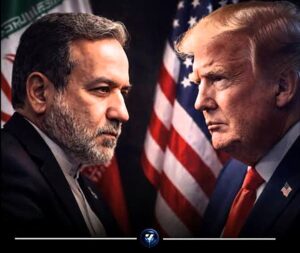
The collapse of the talks was triggered by what Tehran describes as “Washington’s distortion of facts.” Iranian officials, led by Parliament Speaker Mohammad Bagher Ghalibaf, accused the Trump administration of failing to earn the trust of the Iranian people. As JD Vance’s delegation departed Pakistan on April 12, citing a “final and best offer” that Iran rejected, the geopolitical landscape shifted from cautious diplomacy back to the brink of kinetic conflict. The embassy’s defiant stance today serves as the definitive period at the end of a two-week ceasefire that many hoped would lead to lasting peace.
— Mohammad Bagher Ghalibaf, Iranian Parliament Speaker
The Islamabad Standoff: Why Talks Failed
Reliable sources within the negotiating rooms in Islamabad suggest the primary friction point was the status of Lebanon and Hezbollah. Iran’s Foreign Minister, Abbas Araghchi, insisted that any permanent ceasefire must include a total cessation of hostilities against Lebanese infrastructure. When the U.S. delegation refused to bind Israeli military actions into a bilateral US-Iran agreement, the talks reached an impasse. This was further complicated by a new Iranian legislative proposal that seeks to mandate transit fees in rials for all vessels passing through the Strait of Hormuz.
For the Trump administration, the focus remained on “Nuclear Zero”—a demand that Iran completely dismantle its stockpile of highly enriched uranium. The Iranian embassy’s response today clarified that Tehran views peaceful nuclear energy as an “inherent and legitimate right” under the Non-Proliferation Treaty (NPT), accusing the U.S. of deliberately conflating energy needs with weaponization to justify a naval blockade.
The Strait of Hormuz: A Global Chokepoint Under Siege
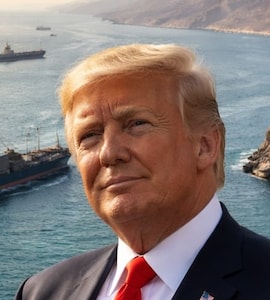
The most immediate consequence of the embassy’s “readiness” is the threat to maritime navigation. On April 13, the United States announced a naval blockade of several Iranian ports, a move Tehran countered by declaring the Strait of Hormuz a “restricted military zone.” This tit-for-tat escalation has paralyzed one of the world’s most vital energy arteries. Analysts at Bloomberg and Goldman Sachs warn that if the “Strait of Hormuz Plan” is passed by the Iranian parliament, hostile vessels—including those from the US and Israel—would be prohibited from transit entirely.
This move would not only disrupt oil supplies but also global trade routes for liquid natural gas (LNG) and essential commodities. The Iranian embassy’s statement emphasizes that they have ” approached the negotiations in good faith,” but are now forced into a defensive posture to protect their territorial waters from what they term “American piracy.”
Key Facts: The April 2026 Crisis
- U.S. Vice President JD Vance departed Islamabad on April 12 after rejected “final offer.”
- Brent crude oil surged 8% to $102.80 per barrel following news of the naval blockade.
- Iranian Parliament is voting on a bill to charge transit fees in Rials in the Strait of Hormuz.
- The Swiss “Protecting Power” channel remains open but is reportedly underutilized.
- ASEAN and other global bodies have called for an immediate restoration of maritime safety.
- Iran insists on the inclusion of Lebanon in all future ceasefire negotiations.
- U.S. intelligence reports possible Chinese missile shipments to Tehran, though China denies this.
- The Iranian Embassy in Vienna accuses the U.S. of “distorting facts” regarding nuclear rights.
- Tehran has moved several mobile ballistic missile units to the coastal Sistan-Baluchestan province.
- Global shipping insurance rates for the Persian Gulf have increased by 300% in 72 hours.
Military Readiness and Proxy Mobilization
The phrase “ready for whatever comes next” is widely viewed as a signal to Iran’s regional proxies. Since the ceasefire’s collapse, there has been a marked increase in activity among Hezbollah and Houthi militants. U.S. officials have expressed concern over intelligence suggesting that advanced shoulder-fired missiles may have reached Tehran, potentially sourced from third-party global powers. While China has denied these shipments, the presence of new tactical hardware in the region suggests a well-prepared defensive network.
Iran’s military strategy for 2026 appears to be one of “asymmetric deterrence.” By threatening to close the Strait and utilizing drone swarm technology, Tehran hopes to make the cost of a U.S. military strike prohibitively high for the Trump administration, which is already balancing domestic economic pressures and other international obligations.
— Abbas Araghchi, Iranian Foreign Minister
Economic Fallout: The $130 Oil Shadow
Economists are now modeling a “worst-case scenario” where Brent crude hits $130 per barrel by May 2026. This would likely trigger a global recession, impacting everything from consumer spending in the U.S. to manufacturing in Europe and Asia. The Iranian embassy knows this economic leverage is their strongest card. By signaling “readiness,” they are essentially reminding the world that the stability of the global economy is tethered to the security of the Persian Gulf.
The Biden-era energy reserves have been largely depleted, leaving the current administration with few tools to suppress prices if a total blockade occurs. This economic reality is fueling the urgency of international mediators from Qatar and Oman, who are currently attempting to restart a “track two” diplomatic channel in Muscat.
Conclusion: A World on the Edge
As of April 14, 2026, the world stands at its most dangerous geopolitical juncture in decades. The Iranian embassy’s statement is not merely a piece of paper; it is a declaration of a new, harder reality. With diplomacy stalled and military assets deployed, the phrase “whatever comes next” has become a haunting question for the global community. Whether it leads to a new round of negotiations or a historic regional conflict will depend on the moves made in Washington and Tehran in the coming hours.